Showing posts with label Anne Dutton. Show all posts

Thursday, 8 May 2025

More on Anne Dutton's Bible


Anne Dutton's Bible and Anne Steele of Broughton
An Analysis of Anne Dutton’s Bible at one time in the possession of Anne Steele of Broughton
The possibility that Anne Dutton (1692-1765) bequeathed her Bible to Anne Steele (1717-78) prior to her death in 1765 has circulated for some time, certainly since its inclusion in Hugh Martin's “The Baptist Contribution to Early English Hymnody,” which appeared in the Baptist Quarterly in 1961. If true, Dutton's act would offer rich connections between the two Baptist women writers. A closer examination of the volume, however, suggests otherwise.
The bible in question is the 1698 edition of the King James Bible by John Canne (Broughton Church Collection, 10/1, Angus Library, Regent's Park College, Oxford), which was popular for more than a century mainly due to his notes. This version of the Bible first appeared in 1647 and a portion of the original Preface has been copied in a very small but neat hand near the front of the volume. The hand is not that of Anne Dutton nor does it appear to be that of Benjamin Dutton, for if the entries in the Great Gransden Church Book between 1732 and 1743 are by him (and they normally would be by the pastor), then the two hands do not match. If neither wrote the passage, then the bible was owned by someone else at some point, possibly Benjamin Dutton’s father, who bequeathed his books to Benjamin after his death in 1719. After Anne Dutton’s death in 1765, her books, along with her husband’s library (more than 200 volumes) were bequeathed to the library of the Great Gransden Baptist Church, where they remained into the 20th century.
There are no markings in the bible that can be definitively identified with either Anne or Benjamin Dutton. This bible was not used as a study or devotional bible by Dutton or anyone else, for the binding is as tight as it was when it was initially purchased and the pages pristine and devoid of any signs of use. Some pencilled scribblings in shorthand can be found on the inside of the front and back covers, but they appear to have been added later in an unknown hand. The handwriting of the notations on the inside page at the front of the bible that identify Dutton and Anne Steele and their death dates are also not in the hand of Anne Dutton. Furthermore, the note uses the spelling “Ann” instead of “Anne” (which is how Dutton signed her letters and her name in the Great Gransden Church Book) and also records Dutton’s death date, which for obvious reasons Dutton could not have known. The only identifiable hand anywhere in the bible is that of Anne Steele, whose signature graces that same page.
One of the most telling features of the bible is the bookplate on the inside cover: “John Collins, Devizes.” This bookplate makes clear that at some point after Dutton’s death, this bible was not bequeathed to the church but was either purchased or given to Collins (c. 1740s-1816) by someone connected with the church. Collins became a member of the Broughton church where Anne Steele worshipped in 1765, the year Dutton died. Most likely he is the son of John Collins, also of Devizes, who preached for several years in the 1770s to a congregation of Baptists there and who was known to the Steeles through their relations, the Attwaters, who themselves had relations through marriage with the Collinses (see reference to John Collins the minister in Jane Attwater's diary for 1775) It is possible that both father and son were antiquarians, but the portrait now held among the collections at Yale would seem to suggest by its date (c. 1799) that he is the John Collins who was a member at Broughton and died in 1816, possibly maintaining his business in Devizes during those years.
As a book collector and antiquarian of some note in Wiltshire at that time, and a Baptist, Collins would have been keen on acquiring something of the celebrated Anne Dutton and may have acquired the bible for the purpose of giving it to Steele as a gift. It is also possible that Steele may have asked Collins to get something of Dutton’s for her own library as a keepsake of the prolific writer.
In either case, Anne Steele's acceptance of the bible and her signature on its inside page suggest a recognition on her part of Dutton’s place in a developing tradition of Baptist women writers, an important feature of this story, regardless of any "bequeathing" on the part of Dutton. By acquiring this volume, Collins found a way to tie the two women together. It seems likely that the origin of the bible as belonging to Anne Dutton is not in error, since Collins, as an antiquarian collector, would have been reluctant for the story to spread if it was not true. A claim of that nature would have been easily proved or disproved at that time. Thus, we should accept this part of the story as fact, that the bible was indeed once in the possession of Anne Dutton.
The corresponding claim that Anne Dutton bequeathed the bible to Anne Steele is easily disproved, though many would prefer the claim to be true. The bookplate alone is sufficient evidence that Anne Steele did not receive the book from Dutton but from Collins, who would never have affixed his bookplate to something he did not initially acquire himself. Anne Steele’s signature would have been added after that acquisition, not prior to it. Even without the bookplate, no evidence exists in the volume that suggests any connection between Dutton and Steele. Furthermore, the very idea of bequeathing one's personal bible to someone outside the family would have been extremely uncommon and viewed as immodest and arrogant, since one's devotional time with the bible was as "private" as any time spent during the life of a devout Dissenter
What actually happened is that Collins either purchased or acquired the book in some manner from the estate of Dutton or the Great Gransden Church and then gave the bible as a gift to Anne Steele, who kept the bible among her possessions, some of which were later, like the books of John Collins, bequeathed to the Broughton Church. During the time the volume resided in the church's library the story of the bible being "bequeathed" to Steele most likely originated. In the twentieth century the church’s library was given on loan to the Angus Library, Regent’s Park College, Oxford; the books were returned to the church in 1976 and then subsequently sold.


Images on the link website are from the Dutton bible - the bookplate of John Collins, the signature of Anne Steele and the notations added later in an unknown hand, Anne Dutton's signature from a letter to Philip Doddridge c. 1749, the bookplate of the Broughton church library, and the recording of the admission of John Collins as a member of the Broughton Baptist Church.
Images from Dutton's bible by the kind permission of the Angus Library, Regent's Park College, Oxford.
The claim that Dutton bequeathed her bible to Anne Steele creates a powerful linking of the two women writers and, if true, would be a striking example of how women writers at that time maintained some sense of community among themselves. Various coteries of women writers operated in that manner, such as the Steele Circle, but in the case of Dutton’s bible, that linkage is incorrect. That does not mean that the two women did not know of each other’s work. It probably goes without saying that they did, since both were very aware of what dissenting writers were doing at that time.
The idea that Dutton was not aware of Steele’s 1760 publication of Poems on Subjects Chiefly Devotional, which appeared just prior to her time as an editor for the Spiritual Magazine (1761-64), also seems highly improbable. The same could be said for Steele, whose religious views would have been very much in step with those of the Calvinist Anne Dutton. Thus, the thought that Anne Steele might have solicited a favour from a member of her church to acquire something that once belonged to Anne Dutton is not improbable at all, nor is the suggestion that that same member of her church would have acquired and then given such a treasure as a gift to Anne Steele. If the latter is correct, then Collins' gift, an artifact that has survived since the 1760s, speaks to the importance of both women as major voices in prose and poetry among the Particular Baptists of the eighteenth century.

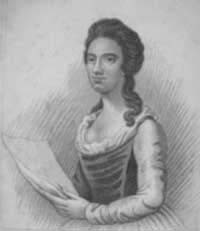
Thursday, 21 October 2021

Anne Dutton

unknown author, Public domain, via Wikimedia Commons
For some reason Anne Steele inherited the Bible of Anne Dutton née Williams (1692?–1765). Dutton, a writer and theologian, was born in Northampton, probably in 1692. She contributed, through her writings, to the ongoing Evangelical Revival of the 18th Century and was a controversial defender of Calvinistic Baptist theology.
Through her parents’ generosity, she obtained a religious education. The family attended the Independent church at Castle Hill, Northampton, pastored by John Hunt (1698–1709). Under Hunt’s pastoral care, Dutton experienced conversion about 13 and when she was 15 became a church member. When Hunt died, he was succeeded by Thomas Tingey (d 1729). Dissatisfied with Tingey, Dutton moved to the Baptist congregation in Northampton pastored by John Moore (1662-1726), where she was baptised. Under Moore’s preaching, she matured spiritually.
In 1714, aged 22, she married a man called Thomas Cattel, of whom little is known. A year later, she and her husband moved from Northampton, to London. There the couple attended the Baptist church in Cripplegate, pastored by hyper-Calvinist John Skepp (d 1721), who served the church from 1715 until his death. When Anne’s husband died in 1720, she moved back to Northampton. The following year, she married Benjamin Dutton (1691/92–1747), a Baptist preacher, who in 1732 became the pastor of the Baptist congregation in Great Gransden, Huntingdonshire. This church grew under Dutton's ministry. The church’s growth meant they needed to construct a new worship place and manse in 1743. On August 17 of that same year, Benjamin travelled to America, either to raise funds for ministry or to promote his wife’s published works, or both. His trip was successful but on his return in 1747, the ship sank; he drowned at the age of 56. Anne, who never had children of her own, remained a widow the rest of her life. She stayed in the Great Gransden congregation, spending much of her time writing theological treatises, poems, hymns and letters. She corresponded with two key leaders of the Evangelical Revival: John Wesley (1703–1791) and George Whitefield (1714–1770). As a Calvinist, she supported Whitefield and critiqued Wesley. Through ink, she challenged Wesley’s views on election, atonement, and Christian perfection. She also wrote a letter to Robert Sandeman (1718–1781) and William Cudworth (1717/18-1763), refuting their antinomianism.
On November 18, 1765 at the age of 73, she died, possibly from throat cancer. Her memorial stone, erected in Great Gransden, sums up her life: she spent her life in the cause of God [and] was the author of 25 vols of choice letters & 38 smaller works. What Anne produced as a theological and spiritual writer became a rich contribution to studying Calvinist Baptist theology and spirituality. Her public use of her pen for God’s glory also broke the convention of her days and inspired other women to do the same.

Sunday, 21 May 2017

Anne Dutton's Bible

In a 1919 edition of  Notes and Queries there is an entry on page 247 that reads thus

Mrs. ANNE Dutton (12 S. ii. 147, 197, 215, 274, 338, 471; iii. 78, 130).— Hearing that the identical Bible used by her was still in existence and preserved in the Baptist Library, Broughton, Hants, I wrote making inquiries, when I received a photograph of it, with the following particulars. Size 64 in. by 3 1/2 in. by 1 3/4 in., bound in leather, with two metal clasps, one of which is broken. Title page: — "The Holy Bible, containing the Old and New Testament. Newly translated out of the original tongues and with the former translations diligently compared and revised. |With Marginal notes| showing| The Scripture to (be) the best Interpreter of Scripture |London.| Printed by Charles Bill, and the Executrix of Thomas Newcomb deceas'd.| Printers to the King and Most Excellent Majesty Anno Dom. 1698."
After the names and order of the Books there is an address, "To the Reader on the Scripture being the best Interpreter of Scripture," signed -"John Canne."
On one of the fly-leaves (in very minute writing) is a copy of an address:—
"To the right honourable Lords and Commons assembled in the high Court of PARLIAMENT, Great Reformers, &c., also signed 'John Canne.' Extracted from ye Amsterdam Edition of Canne's Bible. 12mo, 1647.'
"Inscriptions| Ann Dutton or One who hath tasted that the 'Lord' is gracious.| Great Gransden |Huntingdonshire."
Inserted in another hand:—
"Died 1706, November 17| Anne Steele Junr. |Broughton, Hampshire?
Also in another hand :—
"Theodosia died 1778, Nov. 11th, aged 61 yrs."
The last inscription is in Dutton's own unmistakable minute hand, with "the Lord " as always by her in capitals, and most probably the above extract from Canne's is hers also, as her husband visited Holland, and preached at Rotterdam in 1736.
My kind correspondent at Broughton asks the usual question: "Who was Mrs. Dutton?" The unique library at Broughton was collected by John Collins of Devizes, a former deacon at Broughton, and bequeathed to the church there at his death. Diligent search has been made, but no work of Mrs. Dutton's can be found among its treasures, and how or when the Bible came into the possession of the afflicted but gifted hymn writer Anne Steele yet remains to be known. Neither ladies at any time travelled far from their homes but might have known each other by correspondence, and similarity of sentiment. Mrs. Dutton's correspondence was very extensive. R. H.

(This Bible is now in the Angus Library, Oxford).

Thursday, 20 April 2017

Steele Papers 01 [1-11]

The Steele Papers can be found at the Angus Library of  Regents Park College in Oxford. Items include

1. Broughton church book
Church meetings, accounts, memoranda of baptisms, including Steele family. 2 loose pages at back of volume record baptisms 1708-1730 and deaths 1778-1786. Includes ordination of Henry Steele, 22 September 1699. Please consult the photocopy.
2. Sermons of Henry Steele (?)
Manuscript notebook (16 pp.), containing sermon notes on the nature of God, honour, and [other end of notebook, reversed] the wisdom of God.
3. Bond
Bond in £40 by Robert Hatchatt, yeoman, to William Steele, carpenter, 15 November 1699, to perform covenants specified in a Bargain and Sale of the same date. Endorsed with Assignment of bond by William Steele to James Hayter, 9 March 1699/70. [NB The conveyance by Bargain and Sale to which this bond relates, and which would note the nature of the transaction, is not in this collection].
4.  Broughton Endowments
Memorandum of endowments to Broughton and Wallop churches (lists legacies from Henry Steele, William Steele senior, William Steele junior, Mrs Dunscombe, Mr John Collins, Miss Martha Steele, Mr John Browning, Mr Head, totalling £1300.
5. Charity Commission scheme for the Broughton charities
Charity Commission scheme for the Broughton charities consisting of chapel, manse, site of old manse, and Browning, Collins, Dunscombe, Head, Leach, Steele and Tomkins endowments (including notices to be affixed to the chapel door)
6. Broughton Charities
Photocopies of Charity Commission dividend accounts on the sale of the Old Manse, and on the Parsonscombe, Steele and Russell Trusts.
7. Steele Family’s Devotional Books and Associated Correspondence
8. Anne Steele’s Bible
Formerly Anne Dutton’s. Edition printed by Charles Bill and the executrix of Thomas Newcomb, printers to the King, 1698. Includes printed preface by John Canne. Tipped in to the volume before the title-page is a manuscript transcript [in William Steele’s hand?] of Canne's petition to Parliament extracted from the Amsterdam duodecimo edition of his Bible 1647. The fly-leaf of this volume carries the autographs of Anne Dutton [died 1765] and Anne Steele [died 1778], and the bookplate of Broughton Baptist Library (book no. 1122); the front end-paper carries the bookplate of John Collins, Devizes [died 1817]. Pencilled shorthand on front and back endpapers.
9. Memorandum containing brief notes on Anne Steele
10. Photographs of Mrs E. Davis
Laser-copy photographs of Mrs Ethel Davis and Mr Hugh Steele-Smith at Broughton, May 1984; and of Mrs Davis in fancy dress at Broughton Fair, May 1986.
11. Commonplace Book
Commonplace book, possibly Thomas or Joseph Harbottle’s, written in a commercial (Skelton of Southampton) notebook. Contains extracts and verses written by Stennett, Rippon, Steele, and another copy of the hymn for soldiers, sailors, and landsmen, here called “The Bethel Hymn”. At the end of the book, reversed, is an essay on the Depravity of Man.